I am racing through the station, frantically glancing at my phone. The map says platform three but I can only spot signs for platforms 1-2 and 4-8. Where the f**k is platform three? Crowds of busy people push past me in all directions as I stop to view the map on my phone. I have two minutes to get to the station to make the train to the museum that closes in an hour. It’s my last destination of the day and my last day in this city. Finally, I notice the sign across from me with the station map. As I walk closer I immediately see I already passed station three without noticing. I spin around and retrace my steps. There it is. I pass people on the escalator going down to the platform as the train pulls up. This must be the world’s longest escalator. My feet slam the platform floor as I run for the doors. They shut. The train races away, leaving me disappointed and sweaty on platform 3.
~
As thrilling as it is, backpacking is exhausting. It can allow you to see multiple cities and countries in a shorter period of time, which is amazing. It can also be disappointing and can distract you from what is really going on in the country you’re in.
If I only had more time.
I hate saying goodbye and making new friends every few days.
I don’t have time for that.
I wish I met more locals.
I need a break.
Those are all thoughts I have had while backpacking. I am not writing this to explain that I hate backpacking, I do think it is a great experience and a good way to begin traveling. However, I have learned much more about other cultures and places from slow travel.
What is slow travel? Slow travel means staying in a place for a longer period of time. You can still explore multiple cities/countries but instead of cramming your itinerary by spending two to three days in each place, you slow it down. If you have less time to travel, instead of hitting every hotspot, try to prioritize the few places that would align with the experiences you want from the trip. If you want to learn about culture and meet locals, try a smaller, lesser known area. If you want to meet other travelers and socialize, try hotspots. If you want balance, choose both and ditch the other eight destinations on your list.
Spending over a week in one place allowed me to find my favorite spots, have time to go to recommendations from locals and other travelers, discover lesser known places, relax, be spontaneous, and have a more flexible schedule without stressing you won’t see enough. Slow travel gives you the opportunity to make closer friends and form deeper connections.
Carefully choosing fewer places to travel to also means less “traveling.” When backpacking, a third of my time was spent driving, on a bus, on a plane, or on a train. Time that I would have preferred to spend on the beach, surfing, or exploring. I also felt less guilty about having an unproductive or “rest” day, because I had time. My days didn’t have to be meticulously planned or rushed.
I like to count living abroad as a form of slow travel. When you are able to stay somewhere for longer than a month, you truly start to peak through the backdoor. When I spend more time somewhere, I have deeper conversations with the people who live there. I gain more perspective on the place I am traveling and get to experience it more authentically. I have been invited to a private ceremony in a small Shinto temple, been through a secret, old war cave, celebrated a 100th birthday of an Indonesian man who’s granddaughter I’d befriended, and been on countless back roads and locally known trails. These are just a few examples of experiences that wouldn’t have been possible without forming connections with people by slow traveling. These experiences have helped me connect with the place, myself and my home. Some of these experiences were scary or uncomfortable for me and challenged me, which helped me to push out of my comfort zone.
Slow travel is also not for the rich. You can get a working visa and work while you are traveling. You can volunteer in hostels in exchange for food and accommodation. You can sign up for Work Away and exchange various jobs for accommodation. You can also stick to the same timeline you would with backpacking, but be more selective with where you want to go. There are many ways to save money and stay longer somewhere.
~
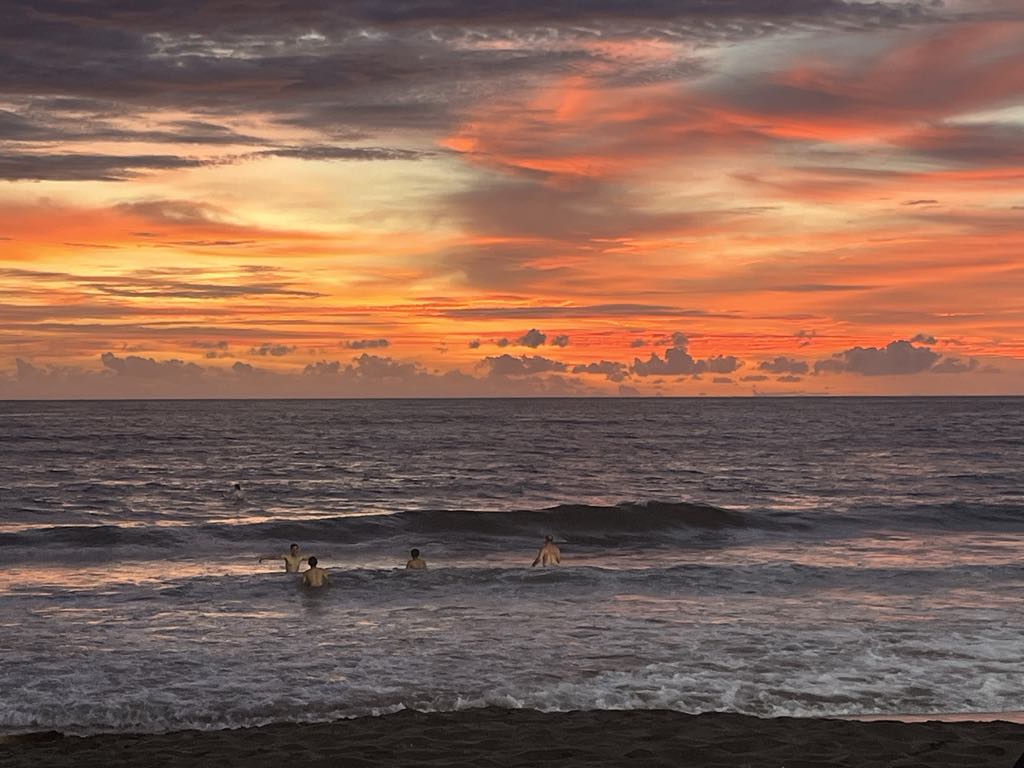
I step onto the platform as the train whirrs past me. I take a deep breath. I’m feeling tired, maybe missing the train was for the best. I have two more weeks to see the museum. I walk back through the station and out the front doors. The sun’s orange light warms my face. I walk in the direction to my hostel and pass a rooftop bar. I decide to stop and check it out. Climbing the spiraling stairs, I hear faint music coming from the roof. The table I choose looks out over a glass balcony to the city below. A man sits in the corner, passionately singing and playing guitar into a mic. The glass high-rises reflect warm light as the sun makes its way below the horizon. As the server brings me a margarita, we begin talking. She invites me out to a concert with her and her friends tomorrow night. After she leaves, I continue to enjoy the sunset, knowing that I am in no rush and have nowhere to be. I am in the moment.
“The great benefit of slowing down is reclaiming the time and tranquility to make meaningful connections–with people, with culture, with work, with nature, with our own bodies and minds”
Carl Honoré
 travelwithquinn.com